

The Boskalis Group’s Sustainability Roadshow arrived in Finland this autumn, bringing together experts from across the Group and Terramare to discuss sustainability from multiple perspectives. Terramare’s CEO Hannu Tomperi highlights the key insights from the day and explains how responsibility is already visible in the company’s daily operations.


Offshore Wind Power – A Growing Sector
Offshore construction is both a demanding craft and a growing industry. According to Tomperi, the profitability of offshore wind power construction in the Baltic Sea will improve significantly by the end of this decade. The Boskalis Group already has solid experience in the field, having participated in the construction of over 150 offshore wind turbines. Terramare’s Arctic expertise ensures that projects can also be implemented in northern environments. This expertise directly supports the green transition and strengthens the prerequisites for clean energy production.
“The cold doesn’t bother us, and we can even blast granite,” Tomperi says.
Beneficial Use of Dredged Materials
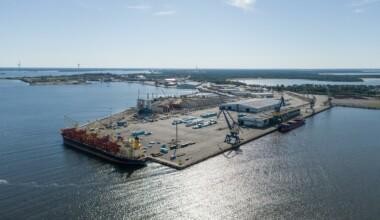
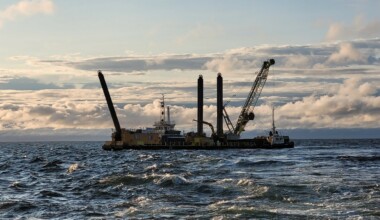
In addition to offshore wind power, the cornerstones of Terramare’s business are channel dredging and harbour quay construction. The company’s 40 vessels and experienced professionals have been involved in many demanding projects. Dredged soil materials have become an important resource utilized in urban construction in Helsinki. One vessel transports an amount of material at a time that would correspond to 10,000–20,000 truckloads in road transport. This reduces heavy traffic and significantly decreases the environmental burden of construction.
Collaboration with Metsähallitus
Terramare is conducting a pilot project with Metsähallitus (the Finnish Forest Administration) to promote the more efficient and environmentally friendly beneficial use of marine sediments. Similar practices are already well established in Germany, the Netherlands, and Great Britain, for example. Through the pilot, Finland is learning new operational models for utilizing natural resources even more responsibly. Terramare is committed to ensuring that the extraction of soil materials always takes place on the environment’s terms and with respect for the marine ecosystem.
Fuel Economy Optimization
Responsibility is also evident in equipment use. Vessel fuel consumption is monitored closely, and personnel are trained in fuel-efficient operating practices and route optimization. In this way, Terramare reduces its carbon footprint and ensures that work is resource-efficient from both environmental and customer perspectives.
Investments in Modern Equipment
Terramare has invested significantly in new equipment in recent years. Examples include a DTH drilling tower that enables more efficient blasting and the floating crane Nordic Hero. The latter – this “hero crane” with nearly 80 metres of deck space – brings substantial capacity for handling increasingly larger structures. It can lift quay elements or offshore wind components weighing up to 500 tons. The new equipment is more energy-efficient and thus supports the group’s sustainability goals. The investments demonstrate that sustainable development is clearly part of Terramare’s daily business operations now – and increasingly guides the direction of development.
“Everyone here can both pour concrete and dredge, so our crews are ready for anything,” Tomperi summarizes.
Expertise Is the Key
Technology alone is not enough – expertise is essential. Terramare’s strength lies in its versatile professionals: employees master both concrete construction and dredging. This makes teams flexible and ensures that projects can be implemented with quality and safety. Responsibility is also reflected in the continuous development of expertise, with lessons learned from every project.